
Florida Slip and Fall Accidents

Unfortunately, slip and fall accidents are common occurrences in the busy stores and parking lots of the sunshine state. If you slip and fall on someone else's property, and your fall was caused by an unsafe condition, you may be able to recover against the property owner.
Some of the most common situations that lead to slip and fall accidents are:
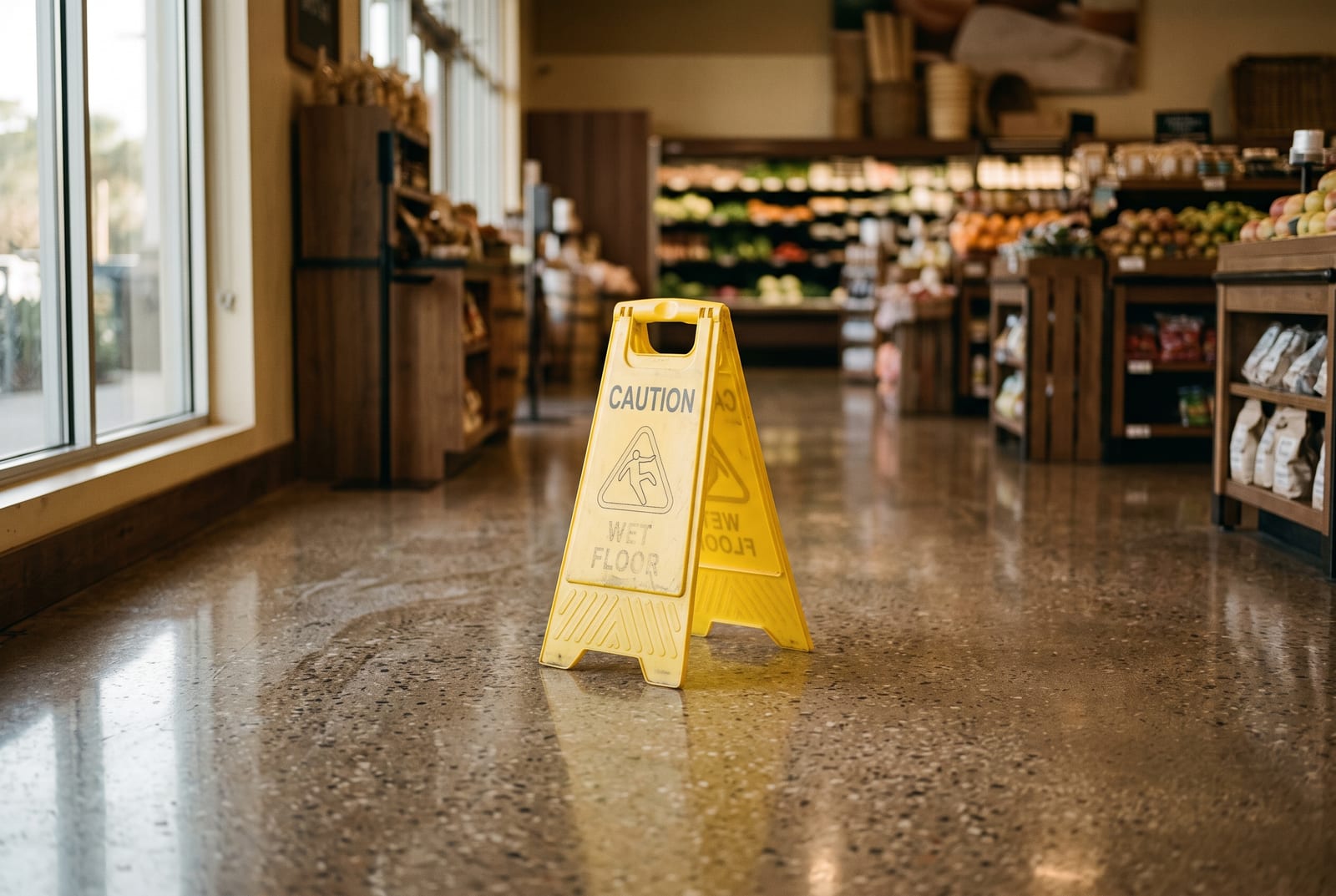
- Wet, slippery surfaces, such as a spill
- Negligently-maintained parking lots with potholes
- Faulty construction equipment
- Unexpected obstacles, such as debris or fallen merchandise
Depending on the situation, slip and fall accidents can cause their victims to suffer bruises, broken bones, spine and brain injuries, and dislocated joints. Also, a slip and fall accident is potentially the basis for a claim for property damage and emotional distress.
1. What you need to prove in your slip and fall case:
You slipped and fell
Your fall caused injuries.
Someone else (often the property owner) failed to maintain a safe environment.
The property owner's failure to maintain a safe environment caused your slip and fall.
2. Florida statute section 768.0755 sets a high bar for a plaintiff to hold a business liable for a slip and fall due to a "transitory foreign substance"
This Florida law states that a business may be held liable for a slip and fall due to the presence of a wet or sticky substance only if it had actual or "constructive" knowledge of the condition. Constructive knowledge may be proven by evidence that the dangerous condition had existed for a period of time prior to the slip and fall, or that the condition occurred with regularity, such that it was foreseeable.
3. Evidence concerning the condition that caused your slip and fall is crucial to prove your case
As the plaintiff, you have the burden of proof to show that there was a dangerous condition that caused you to fall AND that the defendant knew or should have known about that condition and removed it before you fell.
Important evidence:
Video surveillance showing dangerous condition (sticky substance on floor) – most large stores maintain 24 hour video surveillance of their premises
Eye witness testimony that establishes that there was a dangerous condition and that this condition caused your fall.
Maintenance logs that show when and how often the business establishment maintained the premises
4. Proving Your Case at Trial
In order to prevail at trial, you must prove the elements above by a preponderance of the evidence (in other words, show that it is more likely than not that the Defendant was negligent). You may need to hire experts, such as medical doctors, to establish the extent of your injuries and the present and future costs of treatment. You will also need to gather evidence concerning the Defendant's allegedly negligent action, which may involve taking statements from him under oath (depositions) or getting physical custody of evidence (through the use subpoenas).
5. Negligence per se is important way of proving slip and fall case in which property owner has failed to obey safety regulation in the design of its property. (ramp that is too steep)
The principle of "negligence per se" is that a court will consider a defendant's actions that violate a law to be negligent without asking whether a reasonable person would have done the same thing. In slip and fall accidents caused by a structure or surface that does not meet the applicable building codes, negligence per se can be an easy to prove a case.
6. The Four Elements of Negligence in Florida
Negligence occurs when an individual fails to exercise the level of reasonable care expected to minimize the risk of harm to others. In Florida, negligence laws not only define what constitutes a claim but also outline the types of damages a plaintiff may pursue. The four essential elements of negligence in Florida are duty of care, breach of duty, causation, and damages. Here's a breakdown:
Duty of Care – This refers to the legal obligation a person has to act (or refrain from acting) in a certain way based on their relationship to others. For example, every driver has a duty to operate their vehicle safely and in accordance with traffic laws to protect others on the road. Similarly, a business owner has a duty to take reasonable measures to keep their premises safe for visitors.
Breach of Duty – A breach occurs when someone fails to uphold their duty of care. For instance, a driver breaches this duty by speeding, tailgating, or being distracted while driving. A business owner breaches their duty by neglecting to promptly clean up a spill or fix a leaking freezer that creates a hazard in a walkway.
Causation – Causation links the breach of duty directly to the harm suffered. While it might seem straightforward, determining causation can be complex, especially in cases involving multiple parties or factors. To establish causation, it must be shown that the breach of duty logically and foreseeably led to the injury or damage.
Damages – Finally, the plaintiff must demonstrate that they suffered compensable injuries or losses due to the breach of duty. This can be proven through evidence like medical bills, lost wages, or property damage assessments. Additionally, non-economic damages such as pain and suffering or loss of enjoyment of life are also recoverable under Florida law.
7. What Types of Damages You Can Get for a Slip and Fall
Economic damages – medical bills, lost wages, property damage
Non-economic damages – pain and suffering, loss of enjoyment of life, emotional distress, etc.
If you have been injured in a slip and fall accident, or any other accident, call Fort Lauderdale personal injury attorney contact John Clarke at (954) 556-8952 for a free consultation!
This article is general information, not legal advice. For guidance on your own situation, schedule a free consultation with John Clarke.