
What Happens When Someone Dies Without a Will
When someone dies without a will in Florida, they are said to have died "intestate." This does not mean their property disappears or that the government automatically takes it. Instead, Florida law determines who inherits the estate and how the property is distributed.
Understanding what happens in an intestate estate is important for families who are trying to determine what steps must be taken and who has legal authority to handle the decedent's affairs.
WHAT PROPERTY MUST GO THROUGH PROBATE
In Florida, whether probate is required depends primarily on how the decedent's property was titled.
Assets that are titled in the decedent's individual name and do not have a designated beneficiary generally must go through probate before they can be transferred to heirs.
Examples of assets that typically require probate include:
- Real estate titled solely in the decedent's name
- Bank accounts without a payable-on-death beneficiary
- Investment accounts without a transfer-on-death designation
- Vehicles or other titled property owned solely by the decedent
- Personal property such as furniture, jewelry, or collections
In contrast, certain types of property pass automatically outside probate. These commonly include:
- Jointly owned property with right of survivorship
- Accounts with a payable-on-death (POD) or transfer-on-death (TOD) beneficiary
- Life insurance policies with a named beneficiary
- Retirement accounts with designated beneficiaries
- Property held in a living trust
Because of these distinctions, two people with similar assets may have very different probate situations depending on how their property was titled. [Florida Probate Code Chapter 733]
WHAT IS INTESTACY?
If someone dies without a valid will, Florida's intestacy laws determine who receives the estate. These laws are found in Florida Statutes Chapter 732.
Intestacy laws create a default inheritance scheme based on family relationships. The law assumes that most people would want their property to pass to their closest relatives.
WHO INHERITS UNDER FLORIDA INTESTACY LAW
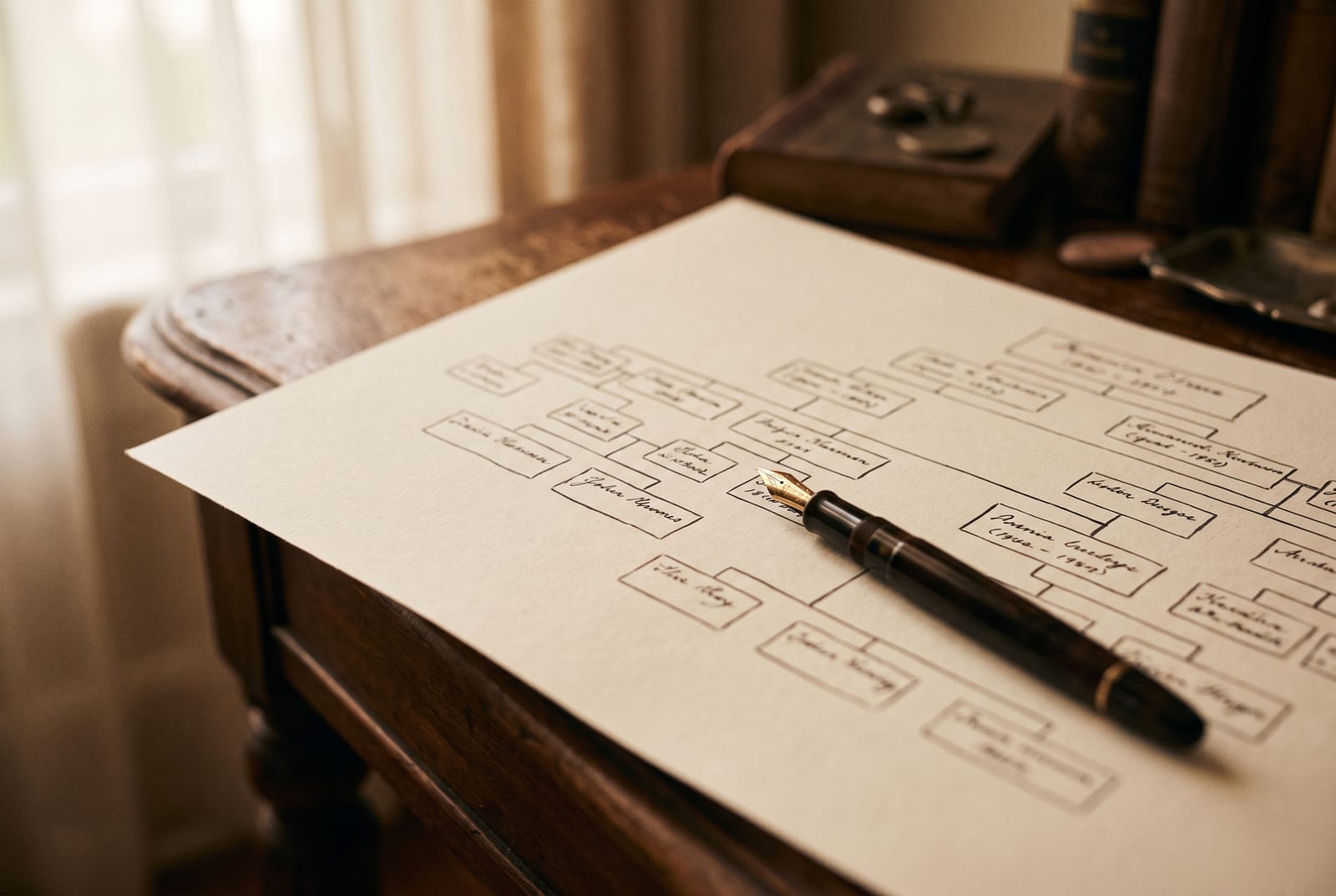
The specific distribution of an intestate estate depends on the surviving family members.
If the decedent is survived by a spouse but no descendants, the surviving spouse inherits the entire estate.
If the decedent is survived by a spouse and descendants (children or grandchildren) who are also descendants of that spouse, the spouse typically inherits the entire estate.
If the decedent is survived by a spouse and descendants from another relationship, the estate is divided between the spouse and the descendants.
If there is no surviving spouse, the estate generally passes to the decedent's descendants (children, then grandchildren if a child has predeceased).
If there are no descendants, the estate passes to other relatives in the following general order:
- Parents
- Siblings
- Nieces and nephews
- More distant relatives if necessary
If absolutely no heirs can be located, the property may eventually escheat to the State of Florida, although this is relatively rare.
WHO HANDLES THE ESTATE IF THERE IS NO WILL?
When someone dies with a will, the will usually names a personal representative (executor) to administer the estate.
When there is no will, the probate court appoints a personal representative. Florida law provides an order of preference for who may serve.
Generally, priority is given to:
- The surviving spouse
- A person selected by a majority of the heirs
- An heir with the closest relationship to the decedent
WHY HAVING A WILL IS IMPORTANT
Dying without a will can create uncertainty and conflict among family members. The intestacy statutes may distribute property in ways the decedent would not have intended.
A properly drafted will allows a person to:
- Decide who inherits their property
- Choose who will administer the estate
- Provide for unmarried partners or stepchildren who would not inherit under intestacy laws
- Create trusts for minor children
- Simplify the probate process
Without a will, the court must rely on the statutory rules, which are designed to be fair in general but cannot account for individual family circumstances.
WHEN TO CONSULT A PROBATE ATTORNEY
If a family member has died without a will, it is often helpful to consult a probate attorney early in the process. Determining whether probate is required, identifying heirs, and properly administering the estate can involve complex legal issues.
An attorney can help determine:
- Whether probate is necessary
- What assets are subject to probate
- Who the legal heirs are under Florida law
- What type of probate proceeding should be filed
If you need help opening a probate estate in Broward, Palm Beach, or Miami-Dade County, contact Clarke Law PA at (954) 556-8952.
This article is general information, not legal advice. For guidance on your own situation, schedule a free consultation with John Clarke.